Regarding The Authenticity Of Allāh’s Two Arms And Chest
Regarding The Authenticity Of Allāh’s Two Arms And Chest
السلام عليكم ورحمة الله وبركاته
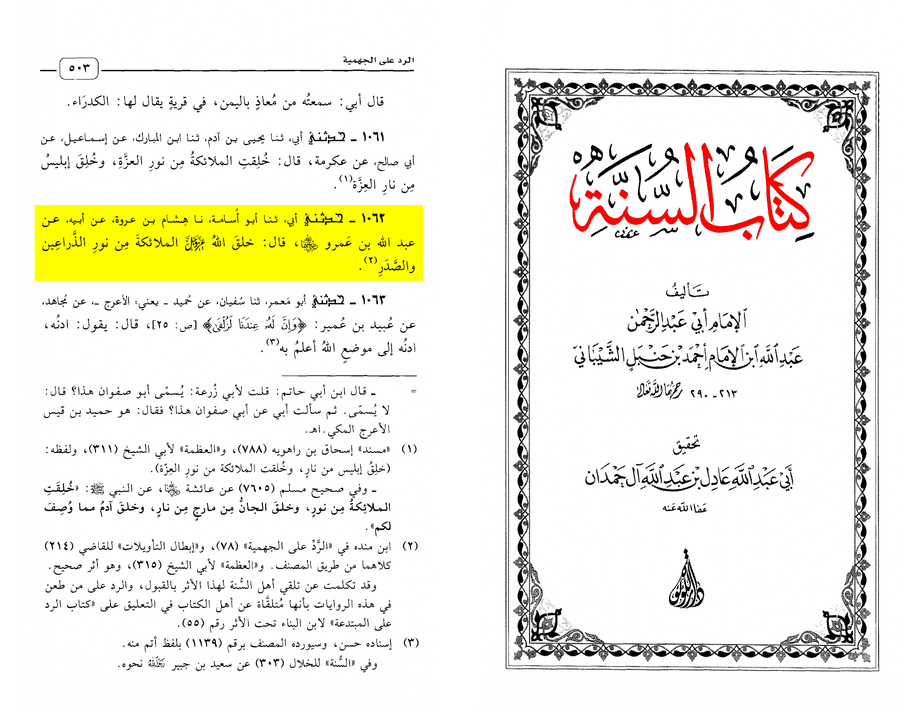
ʿAbdullāh Ibn Aḥmad reported:
My father narrated to me, Abū Usāmah narrated to us, from Hishām Ibn ʿUrwah, from his father, from ʿAbdullāh Ibn ʿAmr, who said:
Allāh, Mighty and Majestic, created the angels from the light of the two Arms and the Chest.
📚 Kitāb As-Sunnah - n° 1062
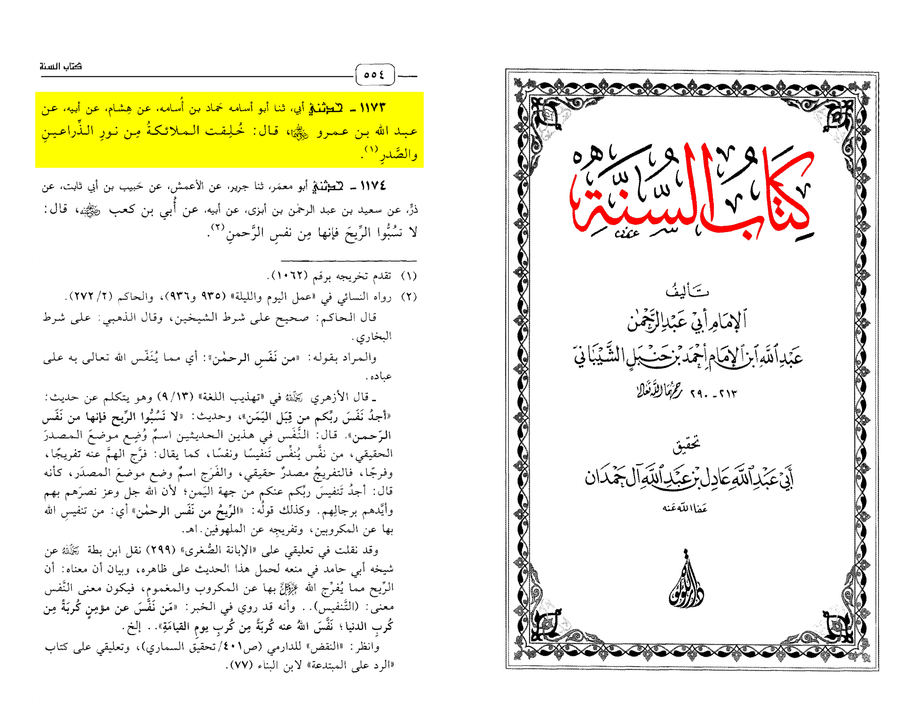
My father narrated to me, Abū Usāmah narrated to us, from Hishām Ibn ʿUrwah, from his father, from ʿAbdullāh Ibn ʿAmr, who said:
The angels were created from the light of the two Arms and the Chest.
📚 Kitāb As-Sunnah - n° 1173
Objection 1: Abū Usāmah Was A Mudallis
As for the claim that he was a Mudallis, then this is doubtful. Ibn Ḥajar included him in his book Ṭabaqāt Al-Mudallisīn due to what Ibn Saʿd said about him, and he himself is rejected due his reliance on Al-Wāqidī, who is not an authority in these matters.
Al-Muʿallimī:
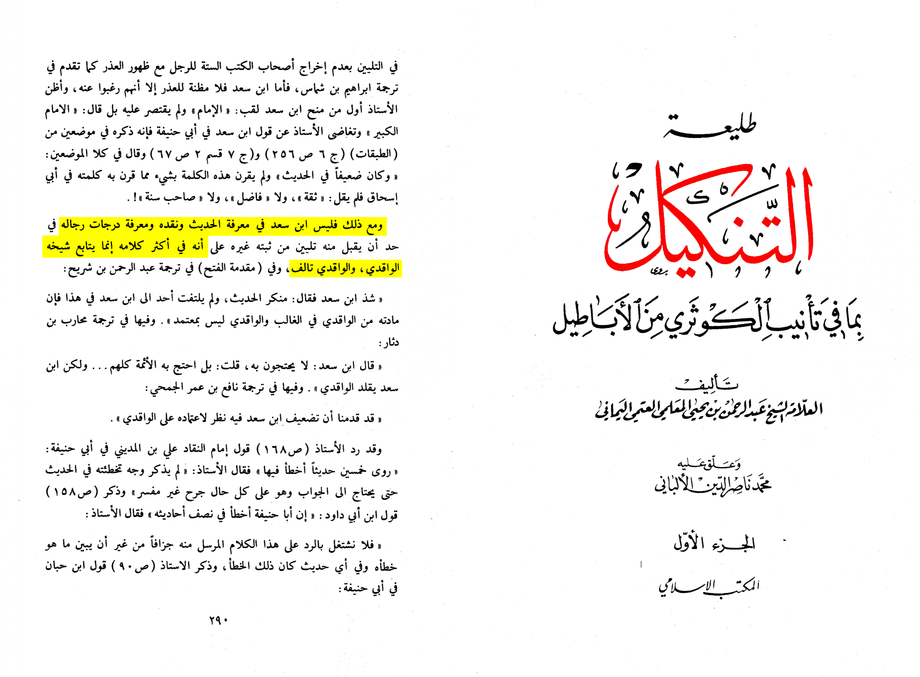
“Ibn Saʿd is not knowledgeable in Ḥadīth, its criticism, or in the ranking of its men… in most of his speech, he merely follows his Shaykh, Al-Wāqidī, and Al-Wāqidī is unreliable.”
📚 At-Tankīl (ed. Al-Maktabah Al-Islāmiyyah) - vol. 1, pg. 290
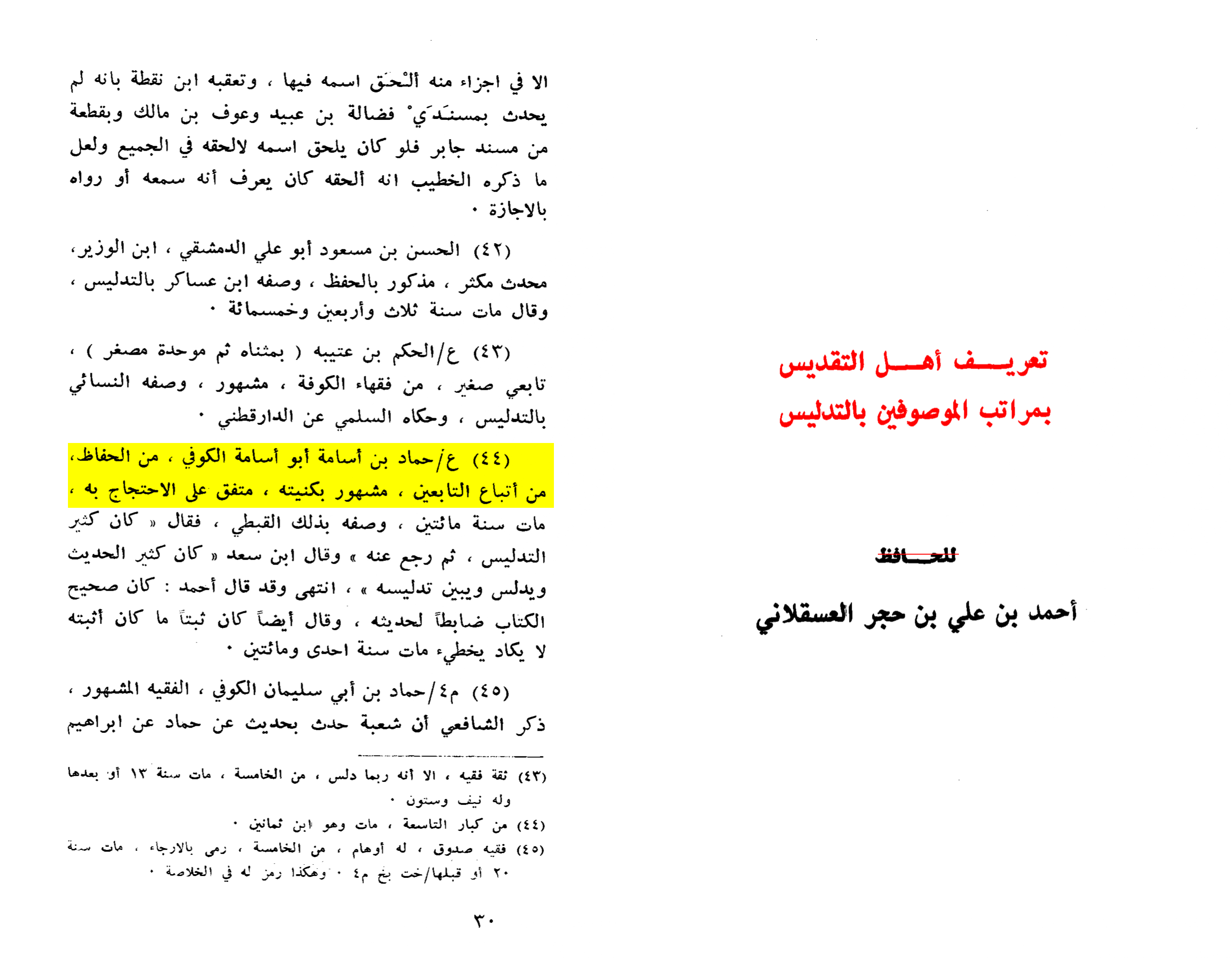
This is evident as Ibn Ḥajar says explicitly:
“Ḥammād Ibn Usāmah Al-Kūfī, Abū Usāmah, among the Ḥuffāẓ from the Atbāʿ At-Tābiʿīn, well known by his Kunyah. There is a unanimous agreement on using him as proof.”
📚 Ṭabaqāt Al-Mudallisīn - p. 30
ʿAbdullāh reports from his father:
“He was reliable, he hardly erred in what he verified.”
“Abū Usāmah is more reliable than a hundred like Abū ʿAṣim (Ad-Ḍaḥḥāk Ibn Makhlad).”
“Abū Usāmah was precise in Ḥadīth and intelligent.”
📚 Al-ʿIlal Maʿrifat Ar-Rijāl - n° 745, 772, and 4891
(view scans in the shared folder link at the end)
For further clarification, refer to this article:
https://majles.alukah.net/showthread.php?t=112637
Even if we grant he practiced Tadlīs, it is irrelevant as he was the most prolific in narrating from Hishām, giving him no reason to narrate indirectly. This reason was also given to accept certain narrations of Al-Aʿmash.
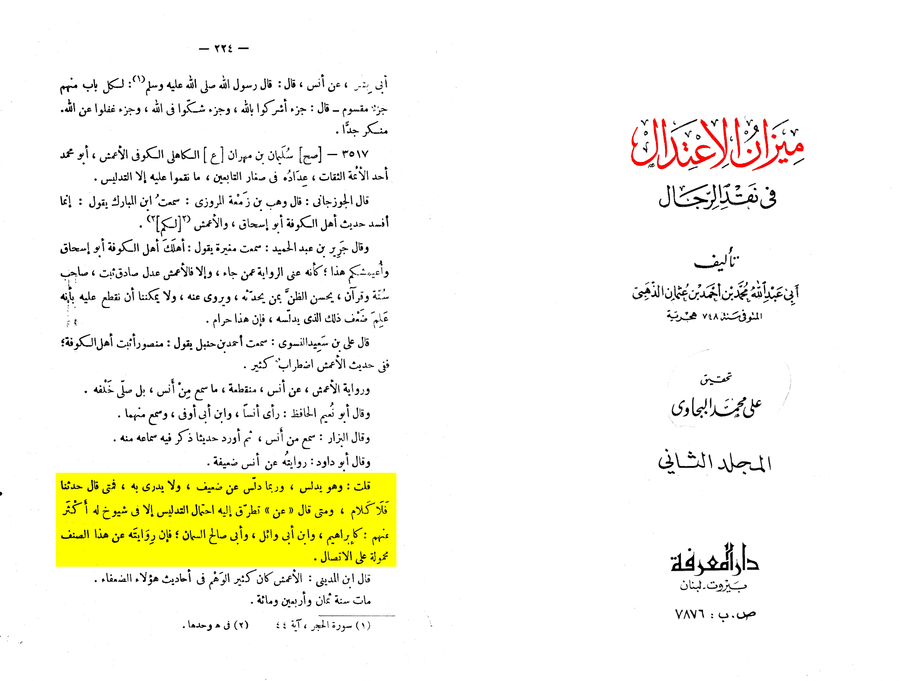
Adh-Dhahabī said:
“I say, he (Al-Aʿmash) practiced Tadlīs, and he may have concealed a weak narrator without realising. So if he says Ḥaddathanā, there is no problem. When he says ʿAn, it opens the possibility to Tadlīs, except from certain Shuyūkh from whom he narrated extensively, such as Ibrāhīm, Ibn Abī Wāʾil, and Abū Ṣāliḥ, for his narration from this category is assumed to be continuous.”
📚 Mīzān Al-Iʿtidāl - vol. 2, p. 224
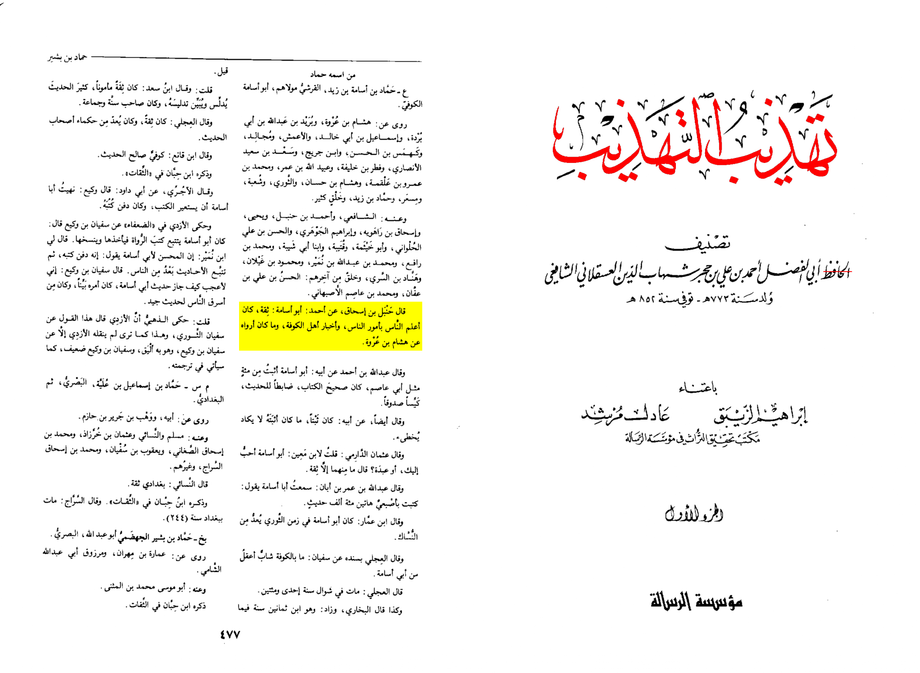
Ḥanbal reports from Aḥmad:
“Abū Usāmah was trustworthy. He was knowledgeable of the people and their affairs, the reports of the people of Kūfah, and what he used to narrate from Hishām Ibn ʿUrwah”
📚 Tahdhīb At-Tahdhīb (ed. Ar-Risālah) - vol. 1, p. 477
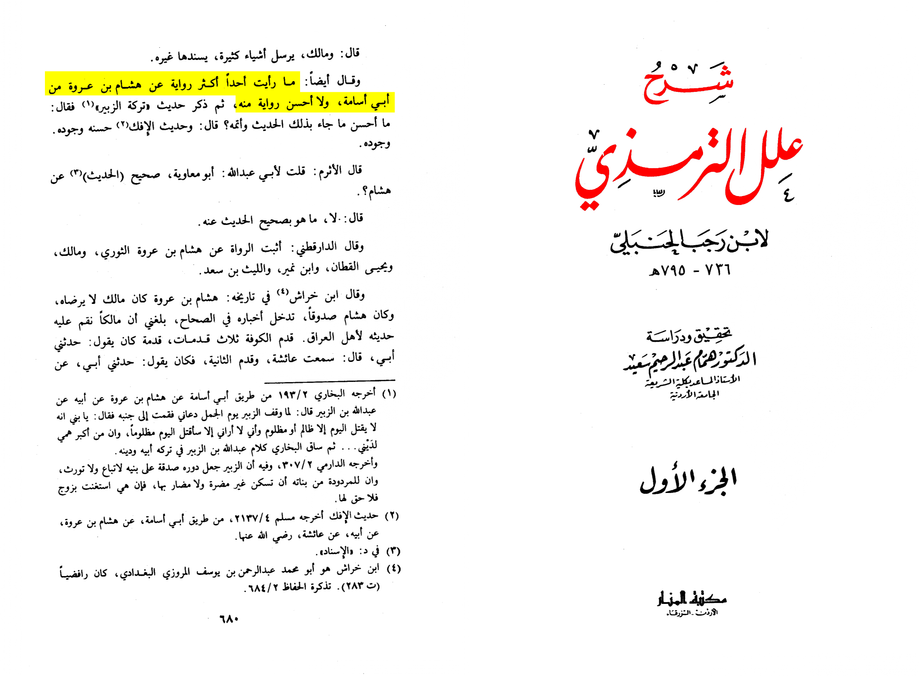
At-Tirmidhī reports from Aḥmad:
“I have not seen anyone who narrated more from Hishām Ibn ʿUrwah than Abū Usāmah, nor anyone who narrated better than him.”
📚 Sharḥ ʿIlal At-Tirmidhī - vol. 2, pg. 680
Additionally, his ʿAnʿanah from Hishām appears in Ṣaḥīḥ Al-Bukhārī multiple times:
Al-Bukhārī 147, Al-Bukhārī 1585, Al-Bukhārī 4291, Al-Bukhārī 3308, Al-Bukhārī 7526, Al-Bukhārī 7327/7328, Al-Bukhārī 3718, Al-Bukhārī 7484, Al-Bukhārī 2976, Al-Bukhārī 2765, Al-Bukhārī 3198, Al-Bukhārī 356, Al-Bukhārī 5038, Al-Bukhārī 3774, Al-Bukhārī 5674, Al-Bukhārī 3896, Al-Bukhārī 5078, Al-Bukhārī 7011, Al-Bukhārī 3930, Al-Bukhārī 5089, Al-Bukhārī 3846, Al-Bukhārī 3777, Al-Bukhārī 2620, Al-Bukhārī 6004, Al-Bukhārī 1959, Al-Bukhārī 317, Al-Bukhārī 3998, Al-Bukhārī 952, Al-Bukhārī 5228, Al-Bukhārī 2979, Al-Bukhārī 5164, Al-Bukhārī 3773, Al-Bukhārī 2538, Al-Bukhārī 4065, Al-Bukhārī 4795, Al-Bukhārī 3978/3979, Al-Bukhārī 5431, Al-Bukhārī 1889, Al-Bukhārī 6979, Al-Bukhārī 4093, Al-Bukhārī 2563, Al-Bukhārī 439, Al-Bukhārī 3909, Al-Bukhārī 5766 Al-Bukhārī 3910, Al-Bukhārī 6972, Al-Bukhārī 4280
And also a similar amount of times in Ṣaḥīḥ Muslim, so are these narrations also weak?
Objection 2: Hishām Became Confused After He Moved To Iraq
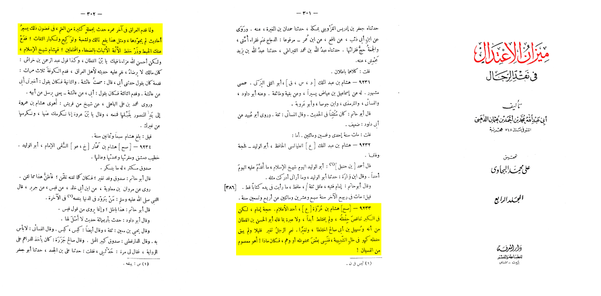
Adh-Dhahabī:
“An authoritative Imām, but in old age his memory declined, and he never became confused. Do not take seriously what Abū Al-Ḥasan Ibn Al-Qaṭṭān said, that he and Suhayl Ibn Abī Ṣāliḥ became confused and changed. Yes the man’s memory changed slightly, and it was not as sharp as in his youth, so he forgot some of what he memorised or had some lapses. So what? Is he protected from forgetting? When he came to Iraq at the end of his life, he narrated a large amount of knowledge. Within that, some narrations were less precise. This happened also with Mālik, Shuʿbah, Wakīʿ, and the major reliable narrators. So leave aside mixing the reliable Imāms with the weak and confused narrators. Thus, Hishām is the Shaykh of Islām.”
📚 Mīzān Al-Iʿtidāl - vol. 4, p. 301-302
At-Tirmidhī reports:
“I asked Abū ʿAbdullāh, ‘Did Hishām ever change?’. He said, ‘It did not reach me that he changed.’”
📚 Sharḥ ʿIlal At-Tirmidhī - vol. 2, pg. 679
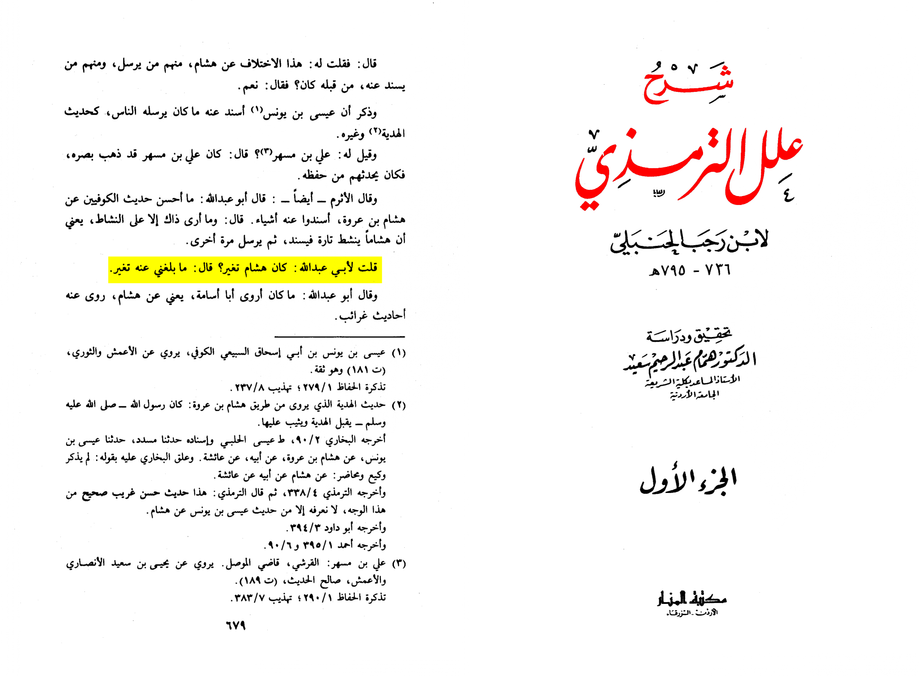
Refer back to the amount of narrations from him through Abū Usāmah in Al-Bukhārī as well.
Objection 3: The Wording “From The Light Of Two Arms & Chest” Is Shādh And Contradicts Established Reports
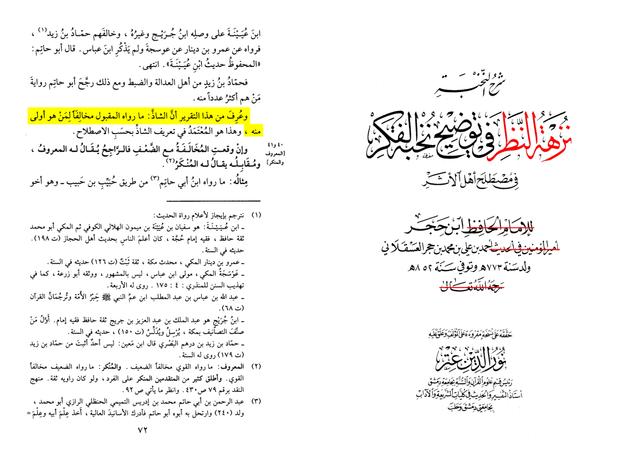
Ibn Ḥajar said:
“And it is known from this report that Ash-Shādh is what is narrated by the accepted narrator but contradicts someone who is more deserving (ie. more reliable) than him.”
📚 Nuzhat An-Naẓar (ed. ʿItr) - pg. 72
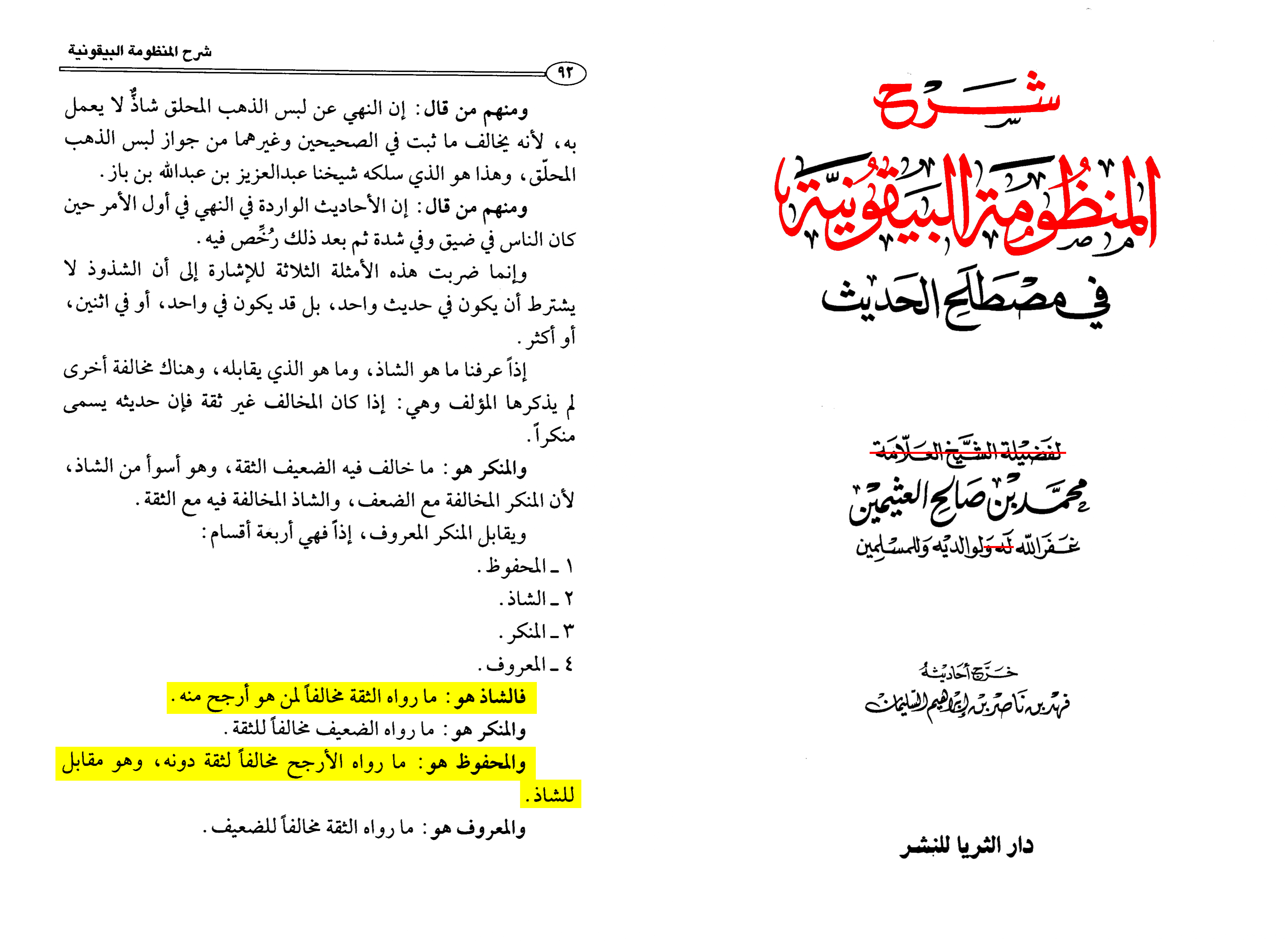
Ibn Al-ʿUthaymīn said:
“Ash-Shādh is what a trustworthy person reports which differs from someone stronger than him… Al-Maḥfūẓ is what a stronger person reports which differs from someone less than him, and it is the opposite of Ash-Shādh.”
📚 Sharḥ Al-Manẓūmat Al-Bayqūniyyah - p. 92
The opposer bears the burden of proof to provide narrators more reliable than Imām Aḥmad and his son omitting their addition. What is most correct is that the variation in wording emerges from narrators in chains other than what we have provided, which is the shortest and by far the most authentic. Thus, this wording is Maḥfūẓ.
Some people have said this narration contradicts the report of ʿĀʾishah. We say there is no contradiction. Rather, the report of ʿAbdullāh Ibn ʿAmr is specific while the report of ʿĀʾishah is unrestricted. As for this Athar being Gharīb, then this has no bearing on its authenticity.
Interestingly, Al-Albānī, when addressing this wording, only weakens it due to what is mentioned in the next objection, not these alleged defects:
“All of this is from the Isrāʾīliyyāt, which it is not permissible to take from, because it was not reported from Aṣ-Ṣādiq Al-Maṣdūq ﷺ.”
📚 Aṣ-Ṣaḥīḥah - n° 308
Objection 4: ʿAbdullāh Ibn ʿAmr Took This From The Isrāʾīliyyāt And His Words Aren’t Ḥujjah In Any Case
The claim that ʿAbdullāh Ibn ʿAmr narrated from the Isrāʾīliyyāt is doubtful. The narration where he mentions finding some books in Yarmūk is Shādh as Maʿmar is the only one to narrate it from Ayyūb and more reliable men contradict him by omitting this wording.
For a detailed explanation refer to this article:
https://saaid.org/Doat/alkulify/33.htm
What is somewhat established is ʿĀʾishah ﵂ rejecting a gift from who she thought was ʿAbdullāh Ibn ʿAmr due to his inclination to the previous scriptures.
Ibn Abī Ḥātim reports with a good chain from Ibn Abī Mulaykah:
“Ibn ʿĀmir sent a gift to ʿĀʾishah, but she thought he was ʿAbdullāh Ibn ʿAmr. So she said, ‘I do not need the gift of someone who follows the books.’ And then she recited Al-ʿAnkabūt 29:51.”
📚 Tafsīr Al-Qurʾān Al-ʿAẓīm - n° 17381
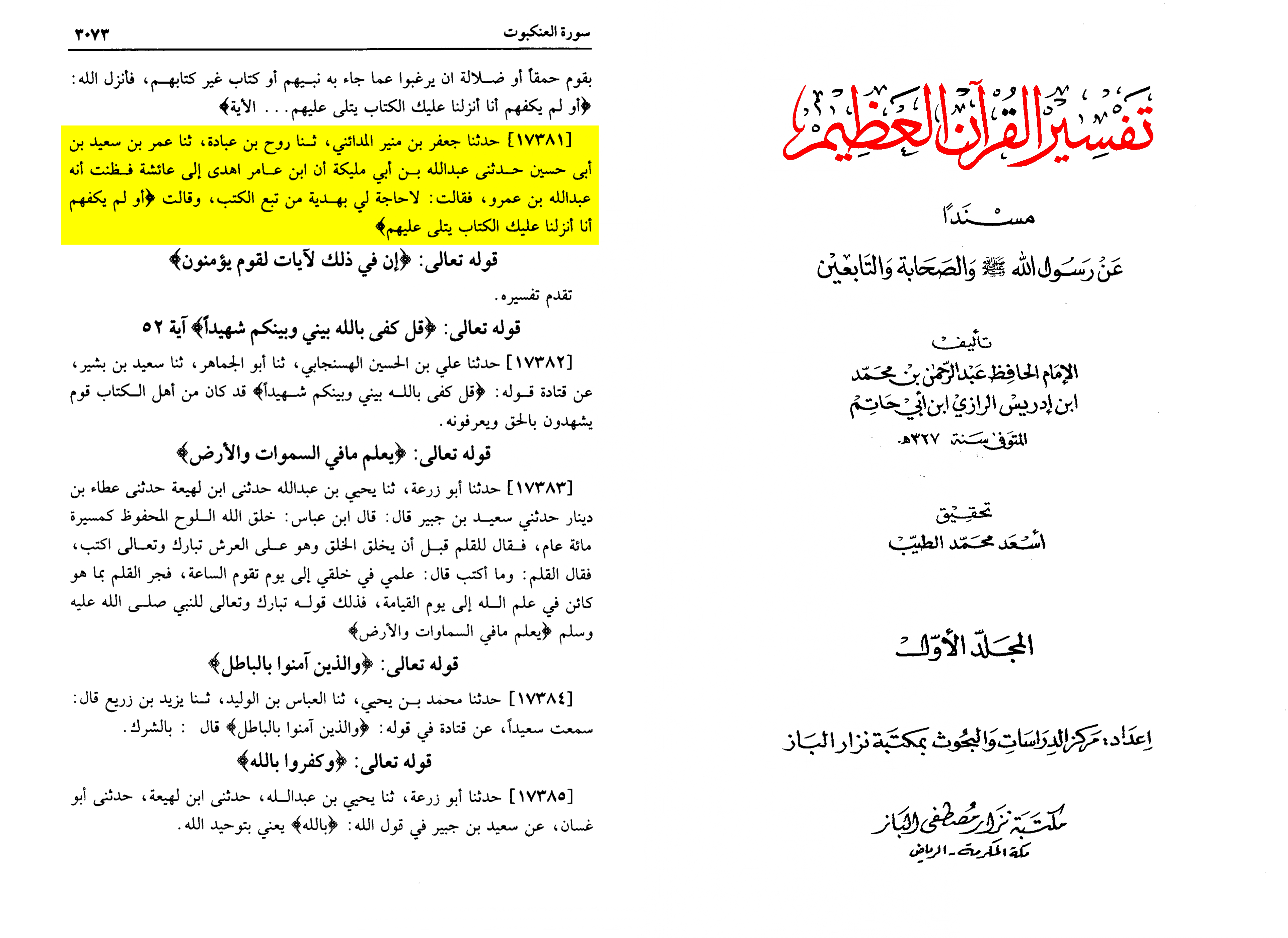
It may be true that he was interested in these books, but this is not enough to establish that he narrated and transmitted from them carelessly as the opposers imply. Rather, he is seen admonishing those who narrate from them without knowledge.
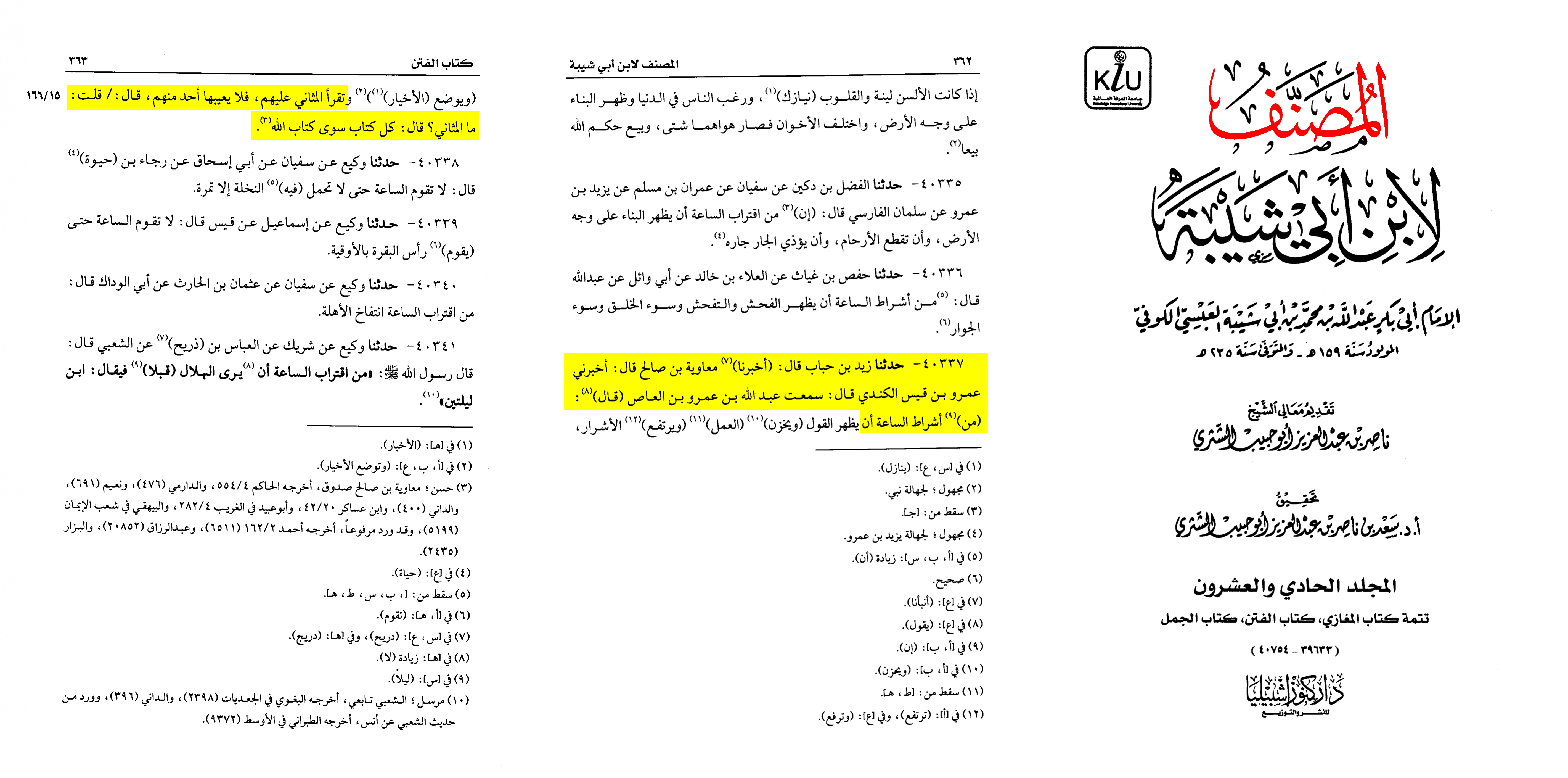
Ibn Abī Shaybah reports with a good chain from ʿAmr Ibn Qays :
“I heard ʿAbdullāh Ibn Amr say, ‘Among the signs of the Hour is that… Al-Mathānī will be recited upon them and none of them will find fault with it.’ I asked, ‘What is Al-Mathānī?’ He said, ‘Every book except the book of Allāh.’”
📚 Al-Muṣannaf (ed. Ash-Shathrī) - n° 40337
It is certain that ʿAbdullāh heard this from the Messenger ﷺ, otherwise a great companion must be accused of lying upon Allāh ﷾. Let us grant that he narrated from the books of Ahl Al-Kitāb. This does not matter as such a companion would not narrate something from them except that it was previously confirmed by the Messenger of Allāh, especially if it pertains to the Ṣifāt of Allāh, a matter which prohibits Ijtihād or negligent statements.
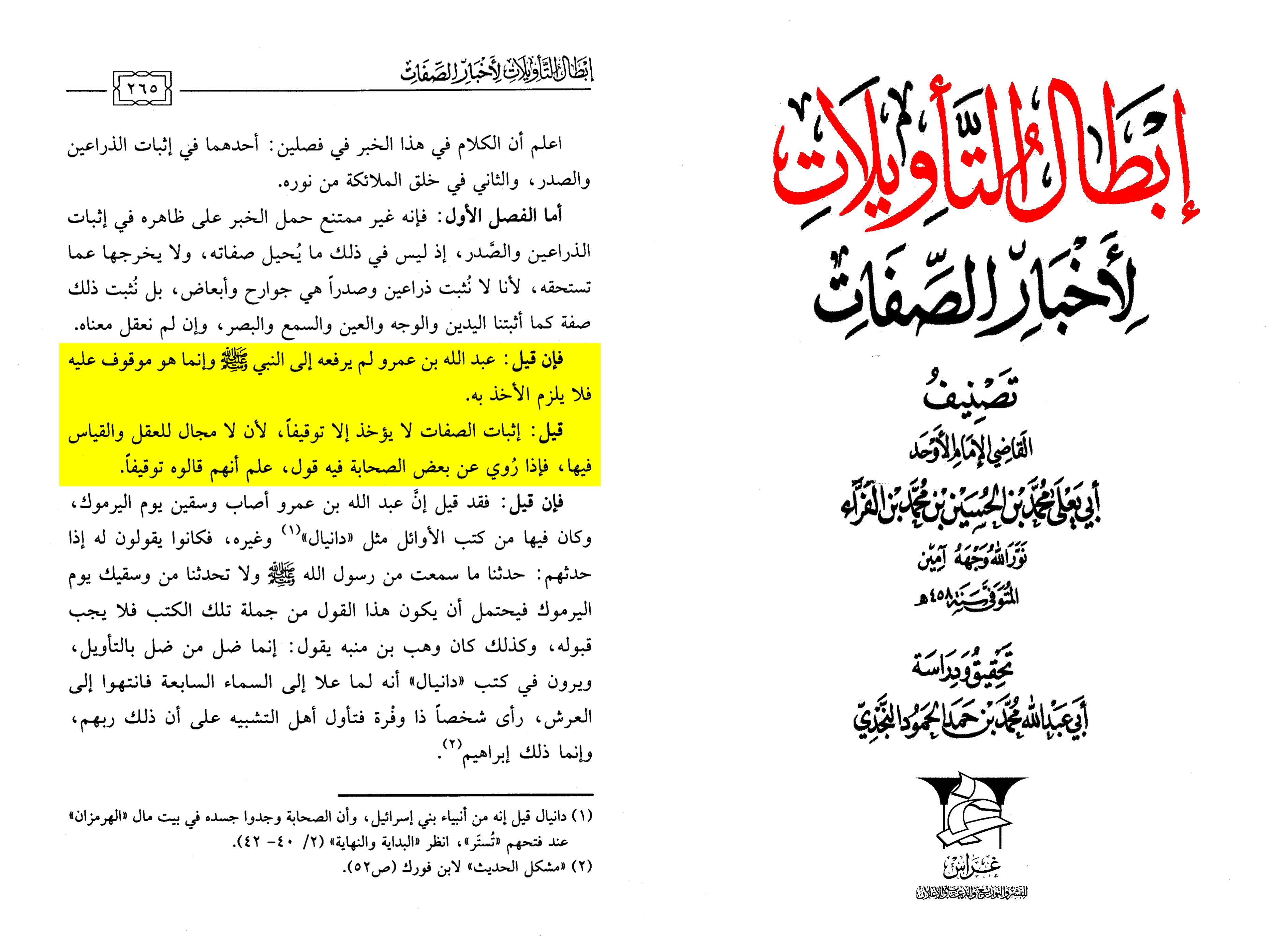
Abū Yaʿlā said:
“If it is said, ‘ʿAbdullāh Ibn ʿAmr did not raise it to the prophet, rather it is Mawqūf upon him, so it is not binding to consider it’, it is replied, affirming the Ṣifāt of Allāh can only be done by the Tawqīfī (ie. limited to the Qurʾān and Sunnah), because reason and analogy have no place in this matter. So if a statement is reported from the companions (regarding the Ṣifāt), it is Tawqīfī.”
📚 Ibṭāl At-Taʾwīlāt (ed. Dār Al-Ghirās) - p. 265
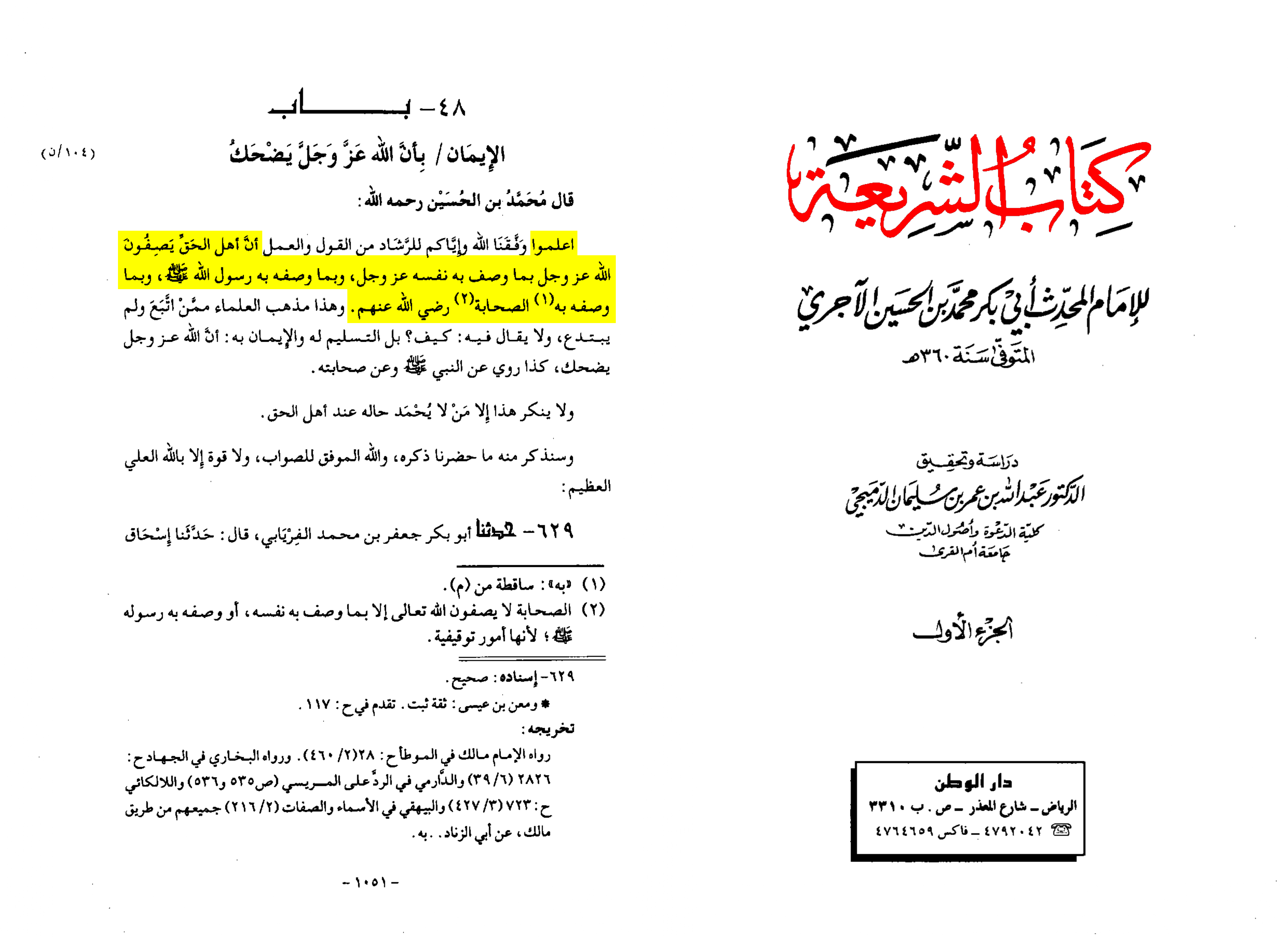
Al-Ājurrī said:
“Know that Ahl Al-Ḥaqq describes Allāh with what He described Himself with, and with what His Messenger ﷺ described Him with, and with what the companions described Him with.”
📚 Kitāb Ash-Sharīʿah - v. 2, p. 1051
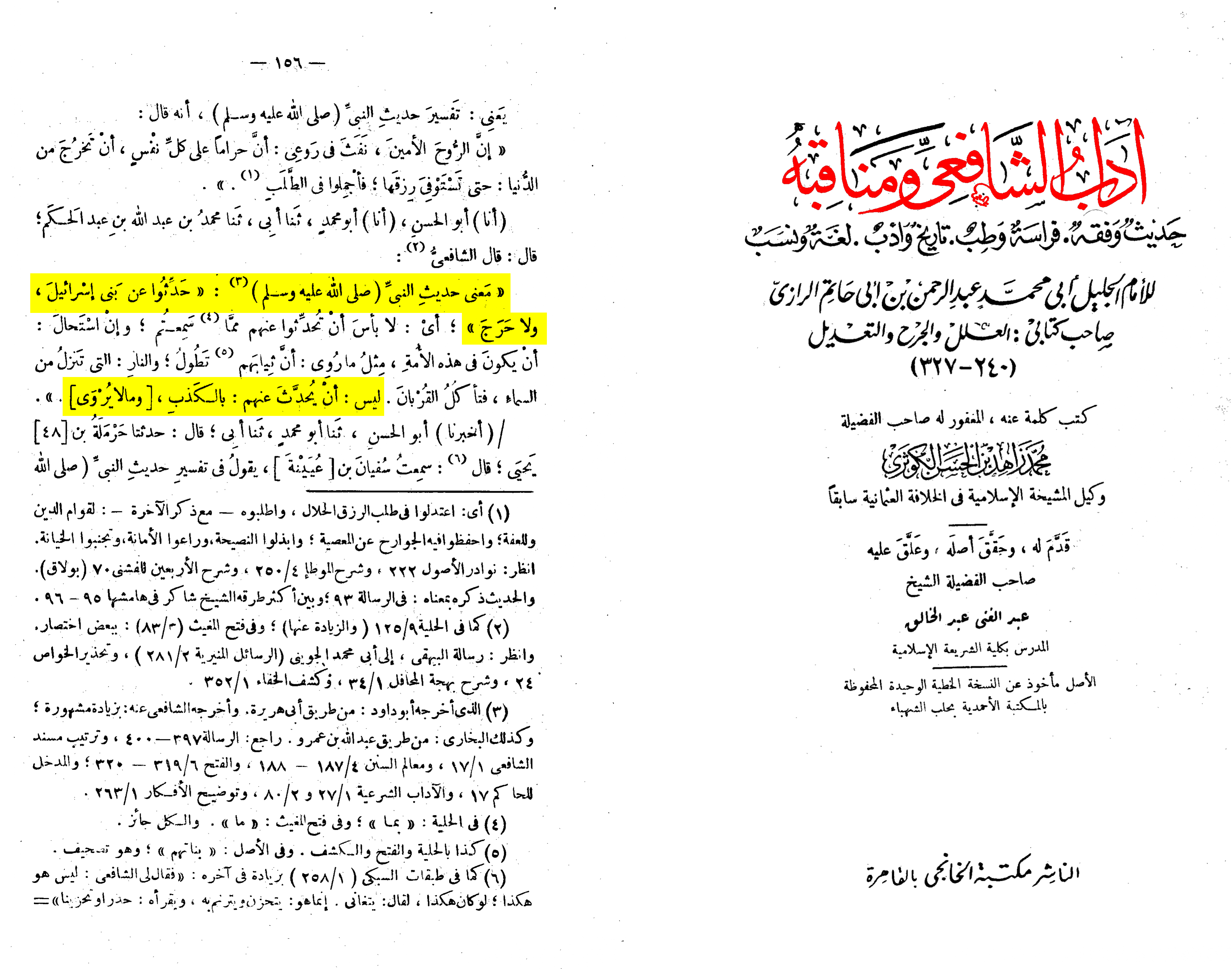
Ash-Shāfiʿī said regarding the Prophet’s ﷺ statement, ‘Relate from Banī Isrāʾīl, there is no harm.’:
“Its meaning is not that one may narrate lies from them or that which is not reported.”
📚 Ādāb Ash-Shāfiʿī Wa Manāqibuh - p. 156
Objection 5: How Can Created Beings Come From The Uncreated Light?
The correct interpretation is that the light refers to the created effects of the uncreated Light of Allāh, similar to how He says to Jannah:
“You are my Mercy, by which I show Mercy to whomever I Will.”
📚 Saḥīḥ Muslim - n° 2846a
We do not say that Jannah is part of Allah’s uncreated Mercy, rather we say it is a reflection or manifestation of it. Similarly, the angels are a manifestation of Allah’s uncreated light.
Abū Yaʿlā said:
“As for the second matter, that the angels were created from His light, it is not to be taken literally. Its meaning is that they were created from His Light as an honor for them, similar to how Ādam was created by His Hand as an honor above other creations. It cannot be taken literally, because that would nullify Allāh’s attributes, and take away from what they are deserving of... And that is the apparent statement of Aḥmad.”
And then he analogised it with the usage of terms such as the Spirit of Allāh, the sky of Allāh, and the earth of Allāh, all of which are created.
📚 Ibṭāl At-Taʾwīlāt (ed. Dār Al-Ghirās) - p. 266-267
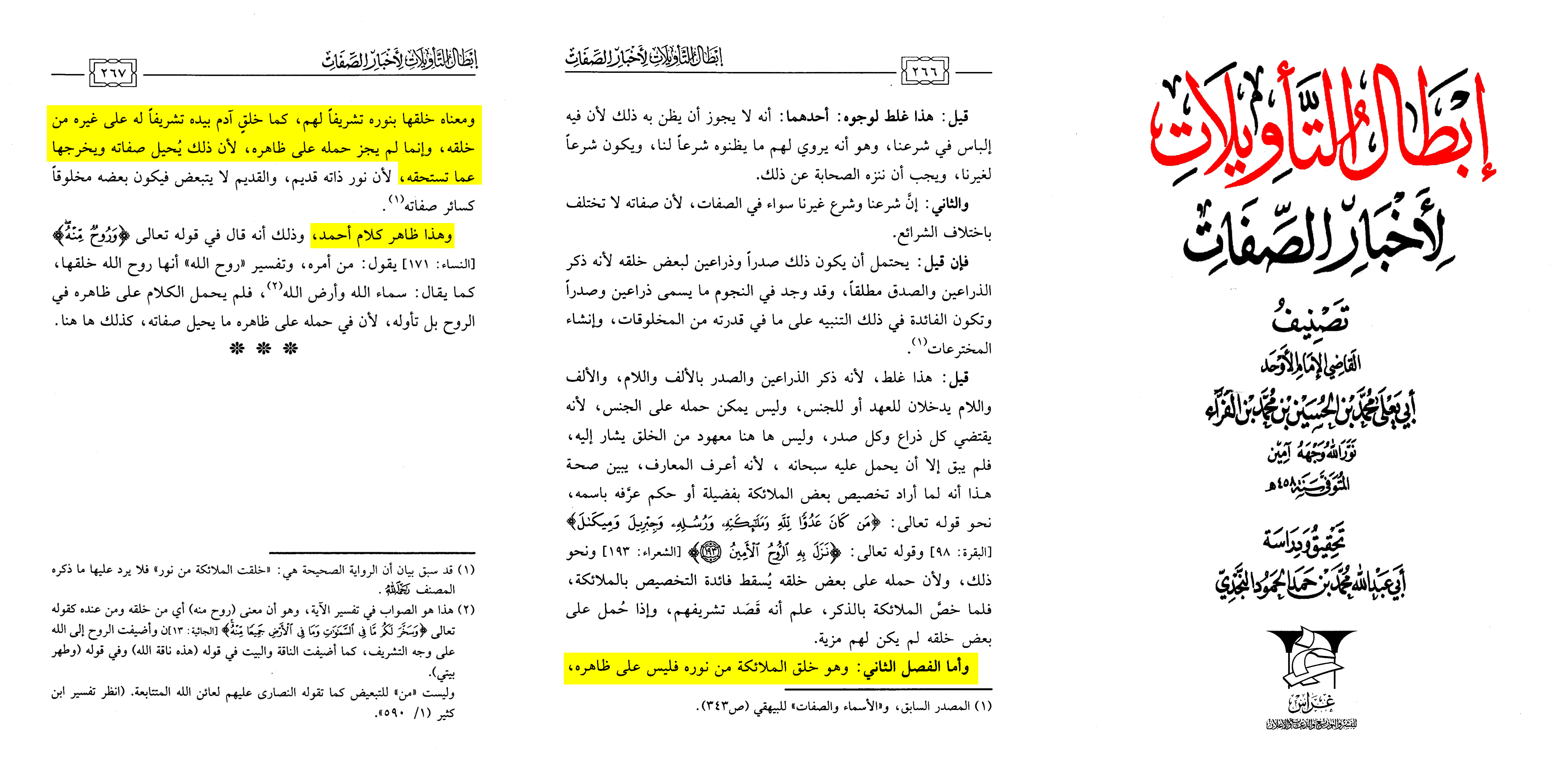
As for what some have claimed, that the Arms and Chest refer to something from the creation, such as stars, then this is false. And this is similar to what some Zanādiqah have claimed about the report of Ibn ʿAbbās regarding the two Feet. May Allāh guide them and us.
Abū Yaʿlā said:
“This is incorrect because he mentioned ‘الصدر والذراعين’ with the definite article (الـ), which indicates either specificity or generality. It cannot be applied to creation in general as it would imply every arm and every chest, and there is no known created thing which this is referring to. Therefore, it can only refer to Him, Glorified is He, because he is the most knowledgeable of all knowledge. And the correctness of this is clarified since when He specifies some angels with a virtue or Ḥukm, he mentions him by his name, ‘Whoever is an enemy to Allāh and His angels and His messengers and Jibrīl and Mikāʾīl...’ Al-Baqarah 2:98, and ‘The Trustworthy Spirit has brought it down.’ Ash-Shuʿarāʾ 26:193.”
📚 Ibṭāl At-Taʾwīlāt (ed. Dār Al-Ghirās) - p. 266
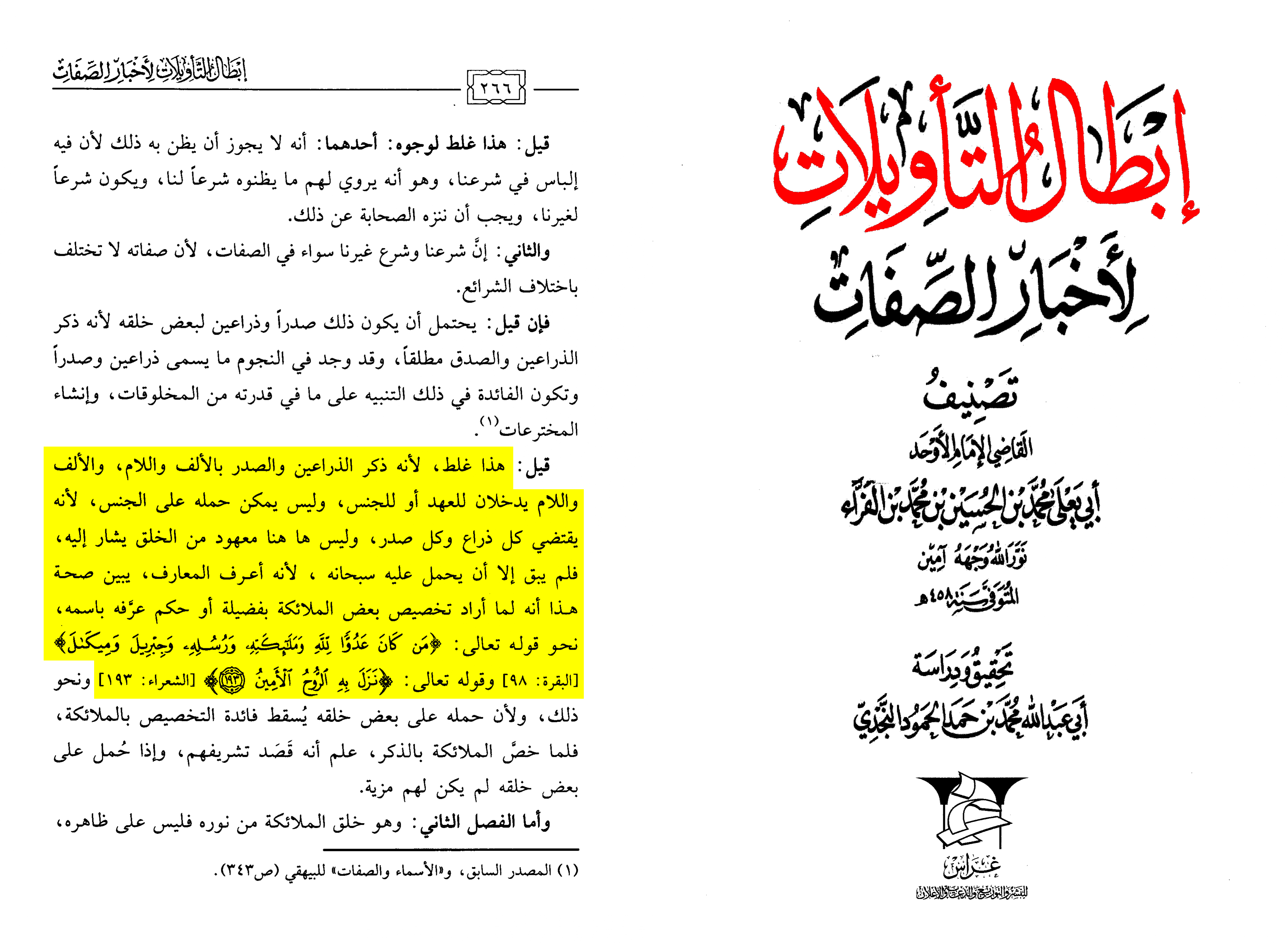
Note: Access all scans in high quality in this shared folder
https://drive.google.com/drive/folders/1xpVsN1SqFt-73KrMXlYg_A7hfWSkwiCT?usp=drive_link